For decades, the story of Lagos real estate has largely been a story of expansion.
Victoria Island emerged as a premier commercial district. Lekki transformed from a relatively quiet peninsula into one of Nigeria's most valuable residential and commercial corridors. Ikoyi consolidated its position at the top of the luxury market, while Eko Atlantic introduced an entirely new model of purpose-built urban development.
Today, another chapter is unfolding further east.
At the heart of the Lekki Free Zone sits Alaro City, a master-planned urban development conceived on more than 2,000 hectares of land and designed to combine industry, commerce, residential communities, education, healthcare, hospitality and recreation within one integrated city.
But the significance of Alaro City extends beyond its size.
What makes the development particularly interesting is its location within a much larger transformation taking place along the Lekki-Epe corridor. Manufacturing, logistics, maritime infrastructure, residential development and international investment are increasingly converging in this part of Lagos.
Alaro City is positioning itself at the centre of that transformation.
More Than an Estate: The Making of a New CityPerhaps the most important thing to understand about Alaro City is that it is not being developed simply as another gated residential estate.
It is a city-scale development.
Alaro City is a joint venture between the Lagos State Government, represented through Lekki Worldwide Investments Limited, and Rendeavour, an urban developer behind large-scale new-city developments across Africa.
The city is located within the North West Quadrant of the approximately 16,500-hectare Lekki Free Zone.
Its masterplan provides for industrial and logistics facilities, commercial districts, residential neighbourhoods, schools, healthcare facilities, hotels, entertainment destinations and approximately 150 hectares of parks and open spaces.
The first 1,000 hectares were master-planned with international architecture and urban-planning firm Skidmore, Owings & Merrill alongside local consultants. Within this first phase alone, the city is planned to accommodate approximately 30,000 residents across low, medium and high-density residential neighbourhoods.
This is important because successful cities are not created merely by selling land.
They are created by building ecosystems.
People need places to live. Businesses need infrastructure. Employees need schools, healthcare and recreation. Manufacturers need logistics. Retail businesses need consumers. Investors need security of title and predictable development standards.
The Alaro City proposition attempts to bring these different elements together within one coordinated masterplan.
The Location May Be Its Greatest AdvantageIn real estate, location is rarely just about where a property is today.
It is about what is developing around it.
Alaro City sits along the Lekki-Epe Expressway within the Lekki Free Zone, placing it close to some of the most consequential infrastructure and industrial investments on the Lagos development corridor.
Among them is the Lekki Deep Sea Port, which strengthens the area's position as a logistics and international trade hub. The wider corridor also contains major industrial investments and is expected to benefit from the planned new Lagos international airport.
This creates an important economic relationship.
Ports attract logistics.
Logistics attracts warehousing.
Industry creates employment.
Employment creates demand for housing.
Housing attracts retail, schools, healthcare, hospitality and other services.
Those services, in turn, make the location increasingly attractive to businesses and residents.
This is how economic corridors evolve into cities.
And it is one of the reasons the long-term story of Alaro City deserves attention.
Infrastructure Before Urban DensityOne of the persistent challenges with property development in Lagos is that buildings frequently arrive before adequate infrastructure.
Roads, drainage, electricity, water and sewage systems then struggle to catch up with rapidly increasing density.
Master-planned developments offer the possibility of reversing that sequence.
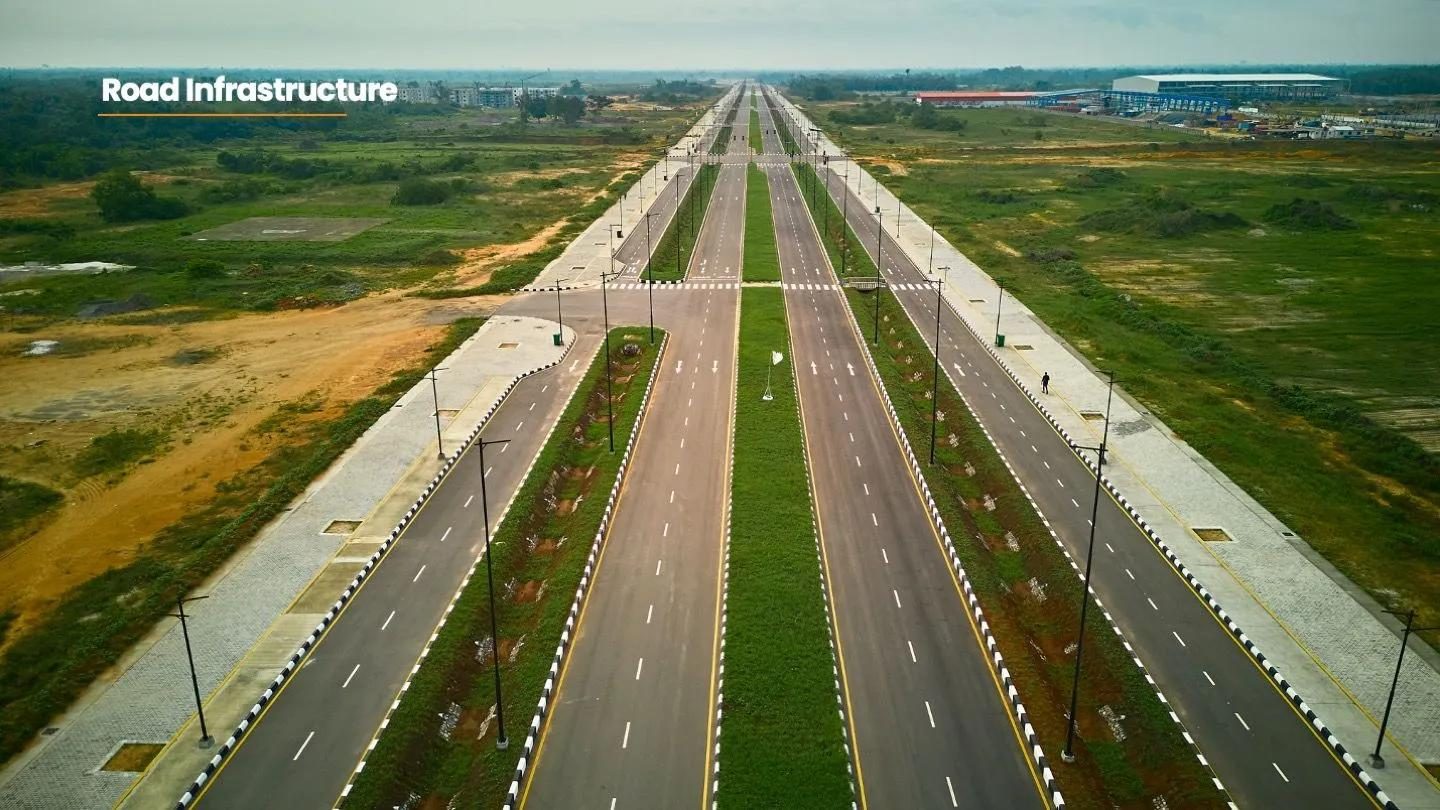
Alaro City has been developing industrial-grade road infrastructure, drainage, water, sewage, power and telecommunications infrastructure as part of the city's broader development programme. Its infrastructure includes an eight-lane, 60-metre-wide boulevard, while electricity is provided through a privately owned Independent Power Plant.
This distinction matters.
For businesses considering manufacturing or logistics operations, reliable infrastructure can directly affect operating costs.
For residents, infrastructure influences quality of life.
For property investors, infrastructure can determine whether an area evolves into a sustainable urban district or simply becomes another collection of developments competing for inadequate public utilities.
Alaro City's master-planned approach therefore forms a significant part of its investment proposition.
The Free Zone AdvantageAlaro City also benefits from its position within the Lekki Free Zone.
Free zones are designed to create an environment that encourages investment, manufacturing and international trade. According to Alaro City, qualifying businesses operating within the zone can benefit from incentives including customs-duty exemptions on imports, the ability to collect revenue in US dollars within the zone, exemption from certain foreign-exchange controls, repatriation of foreign capital and gains, and the possibility of 100% foreign ownership.
For companies involved in manufacturing, export, logistics and international commerce, these benefits can be significant.
But there is also a broader real-estate implication.
A city becomes economically sustainable when there is a reason for people and businesses to be there.
Industrial and commercial activity can create precisely that foundation.
Rather than relying exclusively on expectations of future residential demand, Alaro City is developing alongside businesses that require factories, warehouses, offices, logistics facilities and employees.
As of early 2026, Alaro City reported that more than 90 businesses were operational or under development within the city.
That represents an important transition from masterplan to economic activity.
A Place to Work, Live and InvestOne of the more compelling aspects of the Alaro City model is the integration of employment and residential development.
Lagos residents understand the economic cost of distance.
Someone may live in one part of the city and spend several hours every day commuting to another. Over time, this affects productivity, family life, transportation costs and overall quality of life.
Alaro City is being developed around a different philosophy: creating an environment where residential communities exist alongside employment, commerce, education and recreation.
Residential development is therefore an important part of the masterplan.
The city has allocated areas for different housing densities, while developments such as Universal One have already introduced completed residential units into the city. Alaro City announced the handover of the Universal Homes development as part of a reported $90 million residential project.
This residential component should become increasingly important as commercial and industrial activity within the Lekki Free Zone expands.
Workers, executives, entrepreneurs and service providers operating within the corridor will all require housing.
And proximity to employment remains one of the oldest drivers of residential demand.
Education Is Becoming Part of the EcosystemCities become truly established when families can build their lives within them.
That requires more than houses and offices.
It requires schools.
One particularly significant development is the announcement that Wellington College International plans to open its first African school in Alaro City in 2027.
The significance extends beyond the arrival of another educational institution.
International-standard schools can become anchors for residential communities because education plays a major role in where families choose to live.
For executives and professionals considering relocation closer to the Lekki Free Zone, the availability of high-quality education could materially strengthen the attractiveness of living within the corridor rather than commuting from established areas of Lagos.
This is how a business district gradually becomes a complete city.
The Investment Case for Alaro CityThe investment argument for Alaro City ultimately rests on a simple principle:
Follow infrastructure, employment and economic activity.
Land does not appreciate merely because time passes.
Sustainable appreciation usually requires something to change around the land.
A new road improves accessibility.
A port creates logistics activity.
Factories create employment.
Businesses create commercial demand.
Schools attract families.
Population growth creates demand for housing and retail.
Infrastructure makes higher-density development possible.
Alaro City sits at the intersection of several of these forces.
For a long-term investor, therefore, the question is not simply what a plot of land or property within Alaro City costs today.
The more important question is:
What could this location represent when the surrounding economic ecosystem reaches greater maturity?
That is where the long-term investment thesis becomes interesting.
Understanding the RisksNo serious property investment analysis should discuss upside without acknowledging risk.
Alaro City remains a developing city.
Its ultimate value will depend on continued infrastructure delivery, business occupancy, residential absorption, wider development of the Lekki-Epe corridor and Nigeria's broader economic environment.
Investors should therefore distinguish between what has already been delivered, what is currently under development and what remains part of the long-term masterplan.
Due diligence remains essential.
Prospective purchasers should understand the nature of the interest being acquired, development obligations, applicable service charges, planning restrictions, transfer conditions and the documentation governing their investment.
Alaro City states that it holds a Certificate of Occupancy over the development, while individual transactions are generally structured through sublease arrangements within the city. Its published information also indicates that buyers may be subject to development timelines and other estate regulations.
These are matters investors should understand before committing capital.
A strong location does not eliminate the need for proper legal and investment due diligence.
Alaro City and the Bigger Lagos StoryPerhaps the best way to understand Alaro City is to look beyond Alaro City itself.
Lagos is gradually developing another major economic axis.
Historically, much of the city's premium commercial activity was concentrated around Lagos Island, Victoria Island, Ikoyi and later Lekki.
But infrastructure is pulling development eastward.
The Lekki Free Zone, Lekki Deep Sea Port, large-scale industrial facilities, expanding residential communities and the proposed international airport are creating the foundations for a substantially larger economic corridor.
If this trajectory continues, the Lekki-Epe axis could increasingly function not merely as an extension of Lagos, but as a major commercial, industrial and residential centre in its own right.
Alaro City represents one of the most structured attempts to anticipate that future.
Instead of waiting for urbanisation to occur organically and then attempting to introduce infrastructure afterwards, the city is being planned in advance around the requirements of businesses, residents and investors.
That may ultimately prove to be its greatest advantage.
A City Still Being WrittenThe most interesting cities are not always the ones that have already reached maturity.
Sometimes, they are the ones where the economic foundations are being laid before the wider market fully appreciates what is happening.
Alaro City is still evolving.
Factories are being developed. Businesses are establishing operations. Homes are being delivered. Roads and utilities are expanding. Educational institutions are entering the ecosystem. And the wider Lekki Free Zone continues to attract major investment.
Whether Alaro City ultimately fulfils the scale of its ambition will be determined over many years.
But its underlying proposition is compelling: build infrastructure, attract businesses, create employment, provide housing and develop the social infrastructure necessary for a functioning city.
For investors looking at Lagos from a long-term perspective, that makes Alaro City difficult to ignore.
Because the real opportunity may not simply be the property being sold today.
It may be the city being built around it.
Aston Bernice Properties provides strategic real-estate advisory services to investors seeking opportunities across Lagos' prime and emerging property markets.
We help clients evaluate property opportunities from an investment perspective, considering location, title, infrastructure, development quality, market positioning and long-term value.
For enquiries regarding Alaro City, Eko Atlantic City and other carefully selected property opportunities across Lagos, contact Aston Bernice Properties for a private consultation.
Disclaimer: This article is provided for general information and market commentary only and does not constitute financial, legal or investment advice. Property prices, availability, development timelines, incentives and project specifications may change. Prospective investors should undertake independent legal, financial and technical due diligence before making an investment decision.